
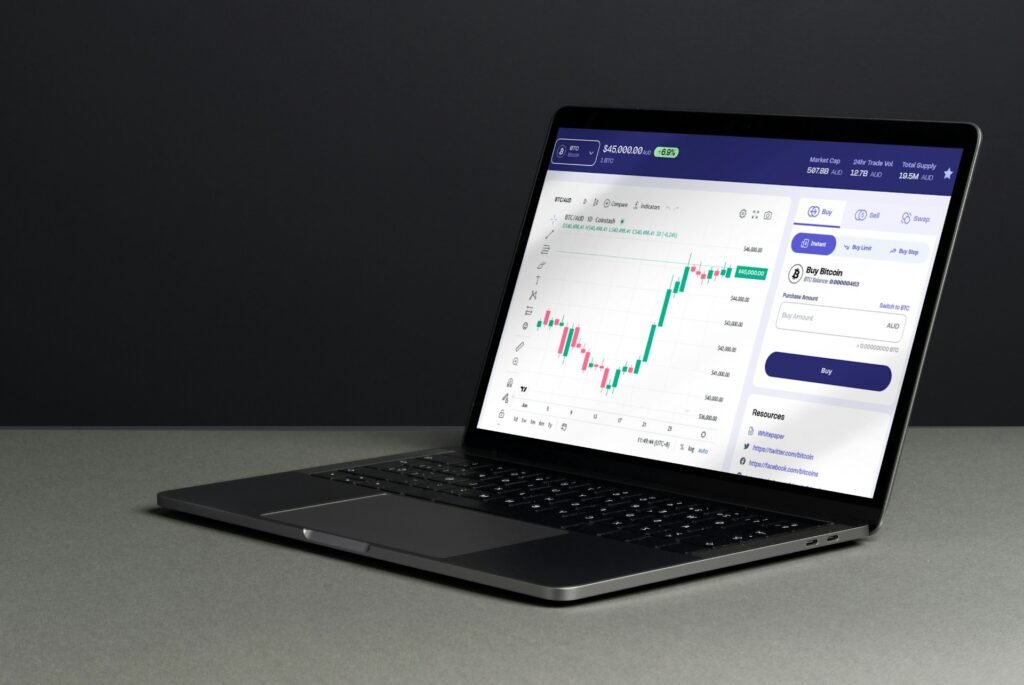
The sideways price trend may seem boring, but consolidation is a normal and often beneficial phase in any market cycle. In the case of digital assets, periods of limited price fluctuation typically follow sharp price rises or falls, acting as a “reset” that allows for the unwinding of excessive leverage, a reassessment of the market situation, and a restoration of liquidity. While this can be frustrating for investors seeking rapid price movements, consolidation offers greater clarity, better entry opportunities, and time for market fundamentals to catch up with the price.
Below, we present seven well-founded reasons why the market is currently moving sideways, and what this might mean for the next phase.
1. Post‑rally digestion
After a sudden or sudden drop, the markets must be kept. This digestion phase allows buyers and sellers to rebalance their positions, reevaluate their risk and absorb new information. In the cryptocurrency market, this effect can be most pronounced due to:
- Major minority participation during the peaks, which disappears when volatility cools down.
- Desapalancamiento during corrections, which reduces the immediate directional impulse.
- Larger differences and smaller order cards during transitions, which disappoint aggressive offers or requests.
Once again, consolidation is the breath between the sprint. It compresses volatility, stretches the ranks and prepares the ground for the following trend once the offer and demand are confirmed.
2. Macro uncertainty and rates
Cryptocurrencies remain a risk-sensitive asset class, making macroeconomic factors important. Uncertainty surrounding inflation, interest rate trajectories, and growth expectations can lead investors to a wait-and-see stance. When central banks maintain ambiguous policy signals, capital tends to flow into cash, short-term bonds, or defensive stocks, reducing new capital inflows into speculative assets.
Key macroeconomic dynamics that foster trading within a range include:
- Persistent inflation or mixed data, which obscures the timing of rate cuts.
- Stronger local currencies or rising real yields, making holding cash more attractive.
- A flight to quality during periods of geopolitical or growth uncertainty, reducing risk appetite.
Until the macroeconomic narrative clarifies—either through a decisive shift toward easing or a crisis forcing price re-evaluation—cryptocurrencies may remain in a neutral position.
3. Regulatory overhang
Regulation is evolving globally, and the market is accustomed to reacting to the owners. Even when the direction to a large plaza is constructive, the ambiguity of a short plaza can generate enthusiasm. Current problems include:
- Implementation details for new currencies (for example, institutional custody, stable cryptocurrency regulation, and exchange licenses).
- Complementary actions in the course that generate success as good news.
- Jurisdictional fragmentation, where the norms differ significantly between regions, slows down the institutional deployment.
The clear effect is the assumption of success. Rare institutions are often implemented aggressively when regulations are still being tested. This translates into slower and more constant flows, which drives consolidation over disruptions.
4. Liquidity and market structure
Liquidity is fundamental to price determination. When it is scarce, sharp price movements are common; when it is stable but moderate, price ranges tend to prevail. Several structural factors can dampen price momentum:
- Fewer active market participants, compared to peak periods, reduce sharp price fluctuations.
- Hedging with derivatives, which balances long and short positions, mitigates directional pressure.
- The normalization of funding rates and basis spreads eliminates the leverage premium that often drives trends.
Furthermore, liquidity can be fragmented across centralized platforms, decentralized platforms, and regional platforms. This fragmentation can slow the transmission of new demand, limiting upward price movements and keeping prices stagnant.
5. On‑chain behaviour is patient
The data in the cadena usually show that the tenedores in Largo Plazo maintain firmness during the consolidation. It is less probable that they would like to rise and become panicked at the bottom, which reduces the realized volatility. The patrons in the widest order, consisting of a rank, include:
- The reserves of the exchanges remain at the bottom over time, which indicates that the coins are moving and have self-custody instead of being prepared for the wind.
- The latent supply increases the longer the tenedores in the large square avoid distribution.
- The behavior of the miners during the halving oscillates between the management of the treasury at a short place and the discipline of costs at a large place, without sustained twenty nets.
When neither the tenedores in a large space nor the miners are aware of the situation, and the speculators in a short space are cautious, the action of the price tends to become tiresome in the place of tendering.
6. Sector rotation under the surface
The stability of the index doesn’t mean that nothing is happening. Often, capital shifts between different trends: Layer 2 scaling, real-world assets, DeFi, AI-related tokens, infrastructure, gaming, and, of course, meme coins. This movement can:
Drive some sectors forward while others stagnate, resulting in minimal overall index fluctuation.
Encourage profit-taking in leading sectors to fund new investments, thus maintaining stable overall prices.
Generate short-lived price surges that fade as attention shifts to other sectors.
If you only look at the overall price, it may appear that there is no activity. However, beneath the surface, portfolios are being restructured, which is a common indicator of consolidation before a new leader emerges.
7. Narrative reset and catalyst gap
The markets are based on history. When a dominant narrative is established — whether the revival of the ETF launch, the speculation over the halving or the redevelopment of DeFi in reality —, the next chapter is late in forming. The trainers continue to launch, but the moments of adoption that generate new demands usually come in oils, not in a diary.
Currently, various messages are still available:
Institutional participation is expanding beyond Bitcoin and Ether, with clearer rights and controls.
Adoption experiments in the real world (pagos, tokenized activities, business integrations), which are leading to production.
Improved user experience (UX) — abstraction of content, better money, faster finalization, which reduces friction for regular users.
This phase of “silent construction” rarely occurs in graphics. Little by little, it elevates the umbral to improve the usability, safety, and experience of the user. When a new catalyst emerges, markets with more solid bases can move with decision.
What consolidation means for you
For both investors and developers, consolidation represents an opportunity, not an obstacle. It provides time to refine strategies, conduct thorough research, and avoid impulsive decisions during periods of extreme volatility.
Keep these practical points in mind:
- Rebalance your portfolio strategically: Reduce concentrated investments and diversify into high-potential assets with controlled risk.
- Prioritize quality: Select projects with strong performance, positive cash flow or fee income, solid reserves, and transparent management.
- Monitor key indicators: Analyze liquidity trends, derivative positions, market activity, and macroeconomic indicators to anticipate market shifts.
Make the most of downtime: Use periods of lower activity to improve products, content, and tools; this work will pay off when the next uptrend begins.
How a breakout may form
No one rings a bell at the end of consolidation, but common precursors include:
- Expanding volume alongside a clean move through well-watched levels.
- Funding rates are flipping and staying elevated or depressed as one side takes control.
- Positive catalyst stacking (policy clarity, breakthrough partnerships, better‑than‑expected flows) without immediate sell‑the‑news reactions.
- Breadth improvement, where more assets participate rather than a narrow leadership group.
Patience is key. The longer and tighter the base, the more meaningful the eventual move can be.
Risks to watch
Consolidation is not risk‑free. It can break lower as easily as higher. Keep an eye on:
- Sudden macro shocks that drain liquidity or spark deleveraging.
- Policy surprises or adverse enforcement actions.
- Exchange‑specific incidents or technical failures that erode confidence.
- Narrative fatigue is turning into apathy, reducing volumes and widening spreads.
Clear risk management—position sizing, stop‑loss levels, and scenario planning—matters just as much in quiet markets as in wild ones.
Conclusion
Consolidation in cryptocurrencies is not a sign of bankruptcy; it forms part of a healthy market rhythm. Among great movements, participants need time to rebalance, rules need time to abandon, liquidation needs time to rebuild, and new stories need time to mature.
The current rank reflects everything: macroeconomic changes, regulatory evolution, cautious liquidation, patient behavior in time, sectoral rotation, and a narrative readjustment. For those who remain disciplined, this phase can be a gift: an opportunity to improve the investigation, refine the paper, and prepare for the next decisive trend. When you attach the catalyst and the size expands, the stable bases during consolidation are usually the ones that boost the sustainable forces.